

Dental Implant FAQs in Valdosta GA
Detailed Answers from a Local Dental Team Focused on Long-Term Results
Patients researching implants usually want two things: clear answers and confidence that treatment is being planned correctly. This dental implant FAQs in Valdosta GA page explains dental implants with real clinical depth, including how we evaluate bone support, how implant stability is achieved, what affects healing, and how long-term success is maintained.
At Valdosta Family Dentistry, our philosophy is conservative planning, clear communication, and predictable outcomes that protect your oral health.
What Exactly Is a Dental Implant
A dental implant is a biocompatible titanium or titanium-alloy post placed into the jawbone to replace a missing tooth root. Implants are part of a system, not a single piece:
- Implant fixture: the post in the bone
- Abutment: the connector between the fixture and the tooth
- Restoration: a crown, bridge, or denture attached to the abutment
Implants restore function by transferring chewing forces into the bone similarly to a natural tooth root. This is one reason implants help preserve the jawbone compared to removable dentures.

Need To Schedule OR Have A Question?
How Dental Implants “Fuse” with Bone
Implants do not fuse like glue. They stabilize through a biological process called osseointegration, where bone cells grow and remodel directly against the implant surface.
Several factors affect osseointegration:
- Bone density and volume at the implant site
- Implant design and surface treatment
- Stability at placement (how rigidly the implant sits initially)
- Inflammation control and oral hygiene during healing
- Smoking, uncontrolled diabetes, and other systemic risks
When osseointegration is successful, the implant becomes a stable foundation for chewing forces for many years.
How Do You Decide If Someone Is a Good Candidate
Bone support
We assess whether bone volume and density can support an implant in the correct position. When bone is limited, we evaluate whether augmentation is appropriate.
Gum health
Active periodontal disease is a major risk factor for complications. Gum tissue should be healthy and maintainable before implant placement.
Bite forces and habits
Clenching or grinding can overload implants and restorations. This does not automatically disqualify treatment, but it changes restoration design and protective planning.
Medical history
Conditions affecting healing, immune response, and bone metabolism can influence timing and approach.
What Imaging Is Needed for Dental Implants
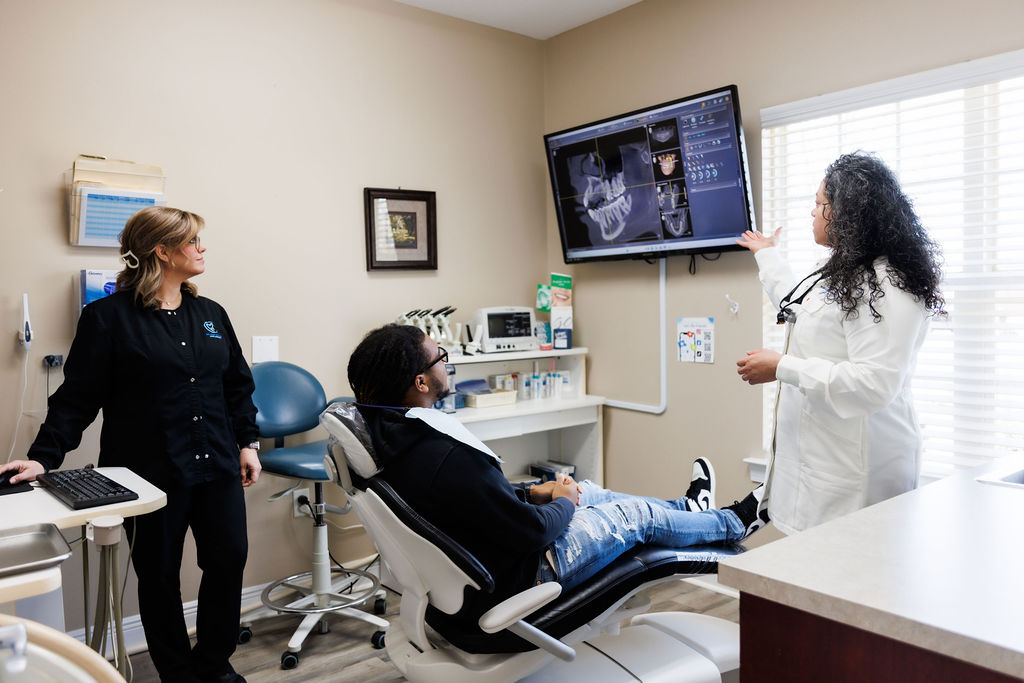
For implant planning, two-dimensional X-rays are often not enough. Implant planning typically requires imaging that supports:
- Evaluation of bone height and width
- Identification of vital structures
- Safe implant positioning and angulation
- Prosthetic planning for the final tooth position
Many implant plans rely on three-dimensional imaging for accuracy. The goal is to place the implant where it can best support the final restoration, not simply where bone happens to exist.
Serving Valdosta and Surrounding Communities
Implant placement is typically performed with local anesthesia. Most patients report pressure and vibration, not pain, during the procedure.
After placement, discomfort is usually related to soft tissue healing and minor inflammation. Typical expectations:
- Mild to moderate soreness for a few days
- Swelling that peaks around 48 to 72 hours
- Improvement each day with proper aftercare
We provide post-op instructions designed to control inflammation, reduce infection risk, and support bone healing.
How Long Does the Dental Implant Process Take
Most implant cases follow stages. The timeline depends on anatomy, bone condition, and the type of restoration.
Typical phased timeline
- Consultation, diagnostics, and planning
- Implant placement
- Healing and osseointegration phase
- Final restoration placement
Healing time varies by patient and implant location. Bone quality, systemic health, and whether grafting is needed can extend or shorten the timeline. The most important factor is not speed. It is stability and long-term success.
What Is “Primary Stability” and Why Does It Matter
Primary stability means how firmly an implant is anchored in bone at the time it is placed. This is important because movement during healing can disrupt osseointegration.
Primary stability depends on:
- Bone density
- Implant diameter and length selection
- Surgical technique and osteotomy preparation
- Implant position relative to available bone
Stable placement supports predictable healing. This is a key reason implant planning is anatomical and technical, not just cosmetic.
Can You Get Dental Implants If You Have Bone Loss
Yes, depending on the degree and pattern of bone loss. When bone is insufficient, treatment may include augmentation procedures such as:
- Socket preservation after extraction to reduce future bone loss
- Ridge augmentation to rebuild width or contour
- Sinus augmentation in the upper back jaw when sinus space limits bone height
The right approach depends on what is missing, where it is missing, and what restoration is planned. The goal is to create stable support for the implant in a prosthetically ideal position.
Are Dental Implants Safer Than Bridges
“Safer” depends on your anatomy and goals, but implants often have advantages because they do not require preparing adjacent teeth for support. A bridge uses neighboring teeth as anchors, which can increase long-term risk if those teeth develop decay or fracture.
Implants also help preserve bone at the missing tooth site by transferring force into the jaw. Bridges do not provide that bone stimulation.
That said, a bridge can still be a good choice in specific situations. The best option is the one that fits your oral condition and long-term risk profile.
What Is the Success Rate of Dental Implants
Dental implants are considered highly successful when properly planned, placed, and maintained. Long-term success depends on:
- Bone support and implant positioning
- Patient risk factors like smoking or uncontrolled diabetes
- Gum health and plaque control
- Restoration design and bite force management
- Ongoing professional maintenance
Patients often assume implant success is only about the surgery. In reality, long-term success is also about soft tissue health and how forces are distributed through the restoration.
What Is Peri-Implantitis and How Is It Prevented
Peri-implantitis is inflammation and infection around an implant that can lead to bone loss. It is similar in concept to periodontal disease but involves implant tissue rather than natural tooth attachment.
Prevention focuses on:
- Excellent daily plaque control
- Regular professional cleanings and monitoring
- Early intervention for inflammation or bleeding
- Managing systemic risk factors
- Designing restorations that allow effective cleaning access
Implants can last decades, but they require maintenance. A good implant plan includes a long-term hygiene strategy from day one.
How Do You Care for Dental Implants at Home
Implants are cared for like natural teeth, but consistency matters. We typically recommend:
- Brushing twice daily with a soft brush
- Daily interdental cleaning (floss or other tools based on restoration type)
- Professional cleanings on a schedule appropriate for your risk factors
- Avoiding tobacco
- Using protective appliances when indicated for grinders
The goal is to keep gum tissue healthy and control inflammation around the implant.
Will Insurance Cover Dental Implants
Coverage varies widely. Some plans cover parts of implant treatment, while others cover the crown but not the implant fixture, or vice versa. Costs can also change depending on:
- Number of implants
- Need for bone grafting
- Type of restoration (single crown, bridge, implant-supported denture)
- Complexity of the case
We help patients understand what is likely covered and what is not, and we provide clear treatment estimates so there are no surprises.
How Much Do Dental Implants Cost in Valdosta GA
The cost depends on the full treatment plan, not just the implant fixture. Typical cost factors include:
- Surgical placement complexity
- Bone grafting or site development needs
- Abutment type and restoration material
- Number of teeth being replaced
- Whether extractions or periodontal therapy are needed first
The most accurate way to understand cost is a consultation with diagnostics. We focus on treatment planning that supports long-term success, not just a short-term fix.
What Is the Difference Between a Single Implant and Implant-Supported Dentures
A single implant replaces one missing tooth with an implant crown. Implant-supported dentures use multiple implants to stabilize a denture, improving:
- Chewing power and confidence
- Denture retention and reduced movement
- Comfort, often with reduced sore spots
- Long-term stability compared to conventional dentures
The right option depends on how many teeth are missing, bone support, and patient preferences for fixed vs removable solutions.
Dental Implant Care for Valdosta Area Patients
Patients choose local implant care for practical reasons that matter long term. Follow-up visits, maintenance, and monitoring are part of implant success.
Valdosta Family Dentistry serves patients throughout Valdosta and Lowndes County, including nearby communities such as Hahira, Lake Park, and Remerton. Having implant care close to home supports continuity, comfort, and better long-term oversight.
Schedule a Dental Implant Consultation in Valdosta GA
If you are exploring implants and want clear answers tailored to your specific case, a consultation is the best next step.
Valdosta Family Dentistry
📍 2935 N Ashley St Ste 130, Valdosta, GA, 31602
📞 (229) 333-8484
We will evaluate your oral health, explain all options, and provide a treatment plan focused on stable, long-lasting results.