

Osseous Surgery in Valdosta, GA
Advanced Periodontal Surgery to Correct Bone Damage and Stabilize Teeth
Osseous surgery is a specialized periodontal procedure used when gum disease has caused permanent changes to the bone surrounding the teeth. At this stage, routine cleanings and non-surgical therapy are no longer enough to control infection.
At our Valdosta dental practice, osseous surgery is recommended carefully and only when it meaningfully improves long-term tooth stability and periodontal health.

Need To Schedule OR Have A Question?
Bone Changes Behind Advanced Gum Disease
Why Periodontal Bone Loss Creates Ongoing Infection
In healthy mouths, the bone supporting each tooth has a smooth, even contour. As periodontal disease advances, bacteria destroy bone unevenly, leaving behind craters, ledges, and angular defects.
These irregular areas trap bacteria deep below the gumline, making proper cleaning impossible and allowing infection to persist even with good home care.
Why This Cannot Be Corrected Without Surgery
Once bone architecture is altered, the gum tissue cannot reattach properly on its own. Osseous surgery is the only way to directly access these areas, remove infection, and reshape bone into a form that can be maintained.
The Purpose of Osseous Surgery
Osseous surgery is not cosmetic and it is not experimental. It is a disease-control procedure designed to:
- Eliminate deep periodontal pockets
- Remove chronically infected tissue
- Reshape damaged bone to reduce bacterial retention
- Create conditions that support long-term periodontal stability
The goal is not perfection, but control and preservation.
When Osseous Surgery Becomes the Right Option
Clinical Indicators We Look For
Osseous surgery may be recommended when evaluation shows:
- Deep periodontal pockets that remain after scaling and root planing
- Progressive bone loss visible on imaging
- Persistent inflammation despite maintenance care
- Signs that tooth stability is at risk
This procedure is only advised after confirming that non-surgical options are no longer effective.
What the Procedure Involves
Surgical Access and Infection Removal
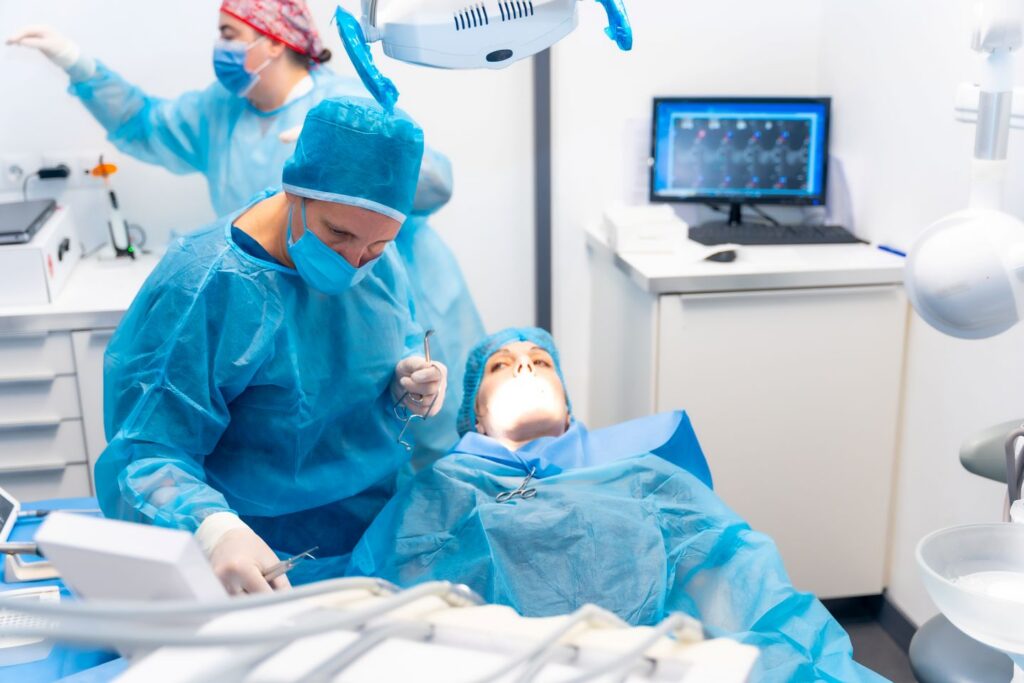
Under local anesthesia, the gum tissue is gently lifted to allow direct access to the infected areas. Diseased tissue and bacterial deposits are carefully removed so the underlying bone can be evaluated.
Bone Reshaping
Damaged bone is reshaped conservatively to remove irregularities that harbor bacteria. Only compromised areas are addressed, preserving as much healthy bone as possible.
Tissue Repositioning
The gum tissue is repositioned in a way that supports healing and allows for easier long-term cleaning. Sutures are placed to stabilize the area during recovery.
Most osseous surgery procedures are completed in a single visit for the treated area.
Healing and Post-Surgical Expectations
Early Healing
Patients typically experience mild to moderate swelling and soreness for a few days. This is expected and usually well controlled with medication and post-operative care instructions.
Long-Term Healing
As healing progresses, inflammation decreases and periodontal pockets become shallower. Follow-up visits allow us to monitor healing and confirm disease control.
What Osseous Surgery Can Realistically Achieve
Osseous surgery is designed to stop progression, not reverse extensive damage. It can:
- Stabilize periodontal disease
- Reduce pocket depths
- Preserve remaining bone
- Improve the long-term prognosis of affected teeth
It cannot regenerate large amounts of lost bone or eliminate the need for ongoing periodontal maintenance.
Healing, Integration, and Long-Term Results
Soft tissue grafts heal in stages:
- Initial tissue attachment occurs within the first two weeks
- Tissue thickens and strengthens over several weeks
- Final maturation continues over 1–2 months
When combined with proper oral hygiene and professional maintenance, grafts provide long-term protection and stability.
Why Patients Choose Our Practice for Osseous Surgery in Valdosta
Our patients trust us because we emphasize:
- Evidence-based periodontal decision-making
Clear explanations and conservative recommendations - A state-of-the-art facility exceeding OSHA and CDC standards
- A welcoming, patient-first environment
We serve patients throughout Valdosta, Hahira, Remerton, Lake Park, and surrounding South Georgia communities.
Take Action Before Bone Loss Progresses
Schedule a Periodontal Surgery Consultation
When bone damage is present, delaying treatment can limit future options. Early surgical intervention often improves outcomes and helps preserve natural teeth.
Valdosta Family Dentistry
📍 2935 N Ashley St Ste 130, Valdosta, GA, 31602
📞 (229) 333-8484
Our team will review your condition, explain your options, and help you decide the best next step.
Osseous Surgery FAQs
Is osseous surgery always necessary for advanced gum disease?
No. Many patients respond well to non-surgical treatment. Osseous surgery is only recommended when bone defects prevent disease control through other methods.
How uncomfortable is osseous surgery?
The procedure is performed with local anesthesia. Most patients describe post-operative discomfort as manageable rather than severe, with soreness improving within a few days.
How long does recovery take?
Initial healing usually occurs within 1–2 weeks. Deeper tissue and bone stabilization continues over several months, with follow-up care guiding long-term success.
Will this surgery save my teeth?
Osseous surgery significantly improves tooth prognosis by controlling infection and preserving remaining support. Outcomes depend on disease severity and ongoing maintenance.
What happens if I choose not to proceed with surgery?
Without correcting bone defects, periodontal disease often continues to progress, increasing the risk of tooth mobility and tooth loss over time.