
Losing a tooth can change more than the appearance of your smile. Even when the gap is toward the back of your mouth and is not easily visible, the missing tooth may affect how you chew, how nearby teeth are positioned, and how your bite functions over time.
That does not mean every missing tooth requires the same treatment or that replacement must happen immediately in every situation.
The first step is understanding what is happening in your mouth and whether replacement is recommended for your individual circumstances. A dental evaluation can help you understand the condition of the surrounding teeth, gums, bite, and bone before deciding what to do next.
Why Does a Missing Tooth Matter?
Every tooth works as part of a larger system.
Your teeth help you bite and chew while supporting one another within the dental arch. When one tooth is lost, that relationship changes.
Depending on which tooth is missing, how long it has been absent, and the condition of the surrounding teeth and gums, changes may develop gradually.
Some people notice very little at first. Others may begin adjusting how they chew or notice changes in the space around the missing tooth.
This is why having the area evaluated can be useful even when it is not causing pain.
Nearby Teeth May Begin to Shift
Teeth are not fixed in exactly the same position throughout life.
When a space is created by tooth loss, neighboring teeth may gradually move or tilt toward the opening.
This may affect:
- Spacing between teeth
- Tooth alignment
- How neighboring teeth contact one another
- The way the upper and lower teeth come together
These changes do not happen the same way or at the same rate for everyone.
Your dentist can evaluate the area and determine whether changes in tooth position are becoming relevant to your overall oral health or future treatment planning.
Your Chewing and Bite May Change
When a tooth is missing, you may naturally begin chewing more on the opposite side or relying more heavily on your remaining teeth.
Depending on the location and number of missing teeth, this can change how chewing forces are distributed.
Changes in tooth position and chewing patterns may also affect how the upper and lower teeth come together.
Evaluating the entire bite helps your dentist consider more than simply filling an empty space. A replacement, when appropriate, should also work with the rest of your teeth and support comfortable function.
The Bone Around a Missing Tooth Can Change
Natural tooth roots help transfer normal chewing forces to the surrounding jawbone.
After a tooth is lost, the bone in that area no longer receives the same type of stimulation. Over time, the shape and volume of the supporting bone may change.
The amount of change varies from person to person and can depend on factors such as:
- The location of the missing tooth
- How long the tooth has been absent
- Gum health
- Overall oral health
- Individual anatomy
If a tooth has recently been removed, extraction site preservation may sometimes be considered to help maintain the area for future restorative planning.
Whether that is appropriate depends on the individual situation.
Can You Replace a Tooth After Waiting for Years?
Having a tooth missing for a long time does not automatically mean you have lost the opportunity to replace it.
However, your mouth may have changed during that time.
Your dentist may evaluate:
- Nearby tooth position
- Gum health
- Bite relationships
- Available bone
- Remaining teeth
- The location of the missing tooth
If an implant is being considered, additional evaluation may be needed to determine whether the area has enough appropriate bone support.
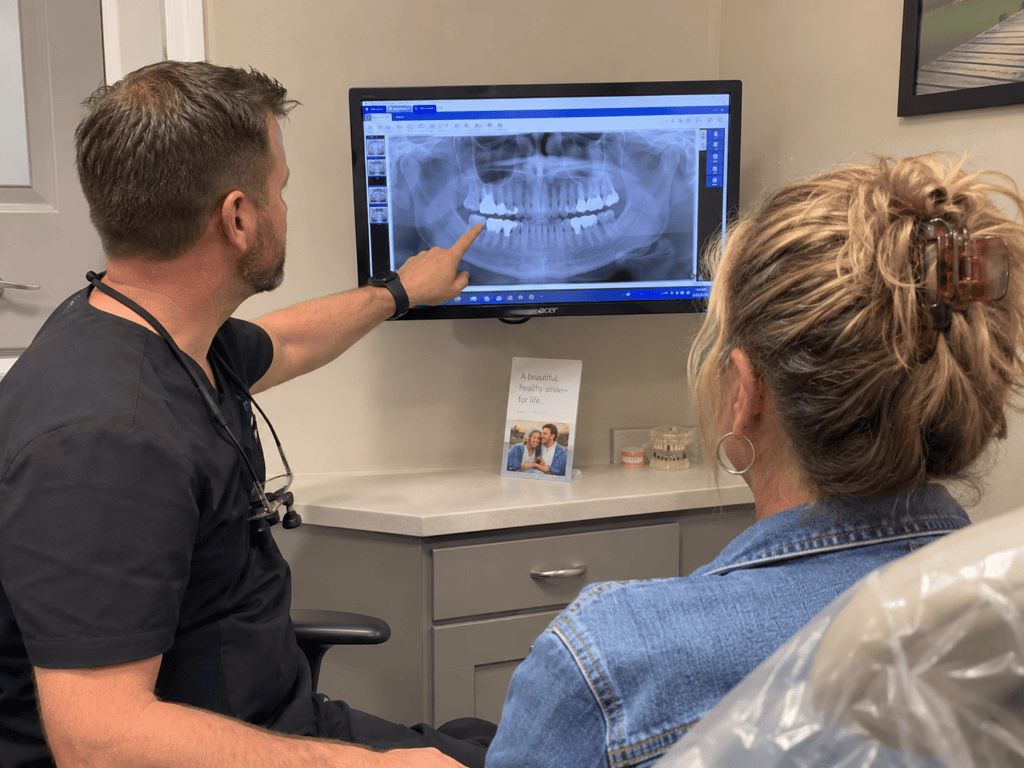
Valdosta Family Dental may use 3D dental X-ray imaging when clinically appropriate. Three-dimensional imaging can provide additional information about the bone and surrounding anatomy during implant treatment planning.
Waiting does not automatically make treatment difficult or impossible. The purpose of the evaluation is to understand your current situation and determine which options may still be appropriate.
Does Every Missing Tooth Require the Same Approach?
Not every missing tooth is managed the same way, and replacement may not be recommended in every situation.
Your dentist may consider:
- Which tooth is missing
- How the space affects chewing
- The position of surrounding teeth
- Your bite
- Gum and bone health
- The condition of remaining teeth
- Your overall oral health
- Your preferences and treatment goals
The decision should be individualized rather than based on a single rule.
Understanding the benefits, limitations, and maintenance requirements of each option can help you make a more informed choice.
What Are the Options for Replacing a Missing Tooth?
There is no single tooth replacement option that is appropriate for everyone.
Dental Implants
Dental implants are one potential option. An implant is placed in the jawbone and supports a restoration designed to replace the missing tooth.
Candidacy depends on factors such as gum health, available bone, surrounding anatomy, medical and dental history, and the condition of the rest of the mouth.
Dental Bridges
Dental bridges provide another way to replace missing teeth. A bridge spans the space created by the missing tooth and receives support from neighboring teeth or another appropriate foundation.
The health and structure of the surrounding teeth are important considerations when deciding whether a bridge may be appropriate.
Dentures
For patients missing several teeth, dentures may be considered as part of a restorative plan.
The right option depends on how many teeth are missing, their location, the condition of the remaining teeth and gums, and the patient’s functional and personal goals.
Why Personalized Treatment Planning Matters
Choosing whether and how to replace a missing tooth requires looking beyond the gap itself.
A thoughtful evaluation considers:
- Teeth
- Gums
- Bite
- Supporting bone
- Existing restorations
- Long-term oral health
- Patient goals and preferences
Technology can provide valuable information, but it is only one part of treatment planning.
Valdosta Family Dental emphasizes patient education and open communication so patients can understand why a particular option may be recommended and how alternatives compare.
The goal is not to steer every patient toward implants, bridges, dentures, or another predetermined solution. It is to identify an approach that makes sense for the individual situation.
Understand Your Options Before Deciding What to Do
A missing tooth may not create an immediate problem, but changes in tooth position, chewing, bite relationships, or supporting bone can occur over time.
That does not mean waiting always causes complications or that every missing tooth needs to be replaced immediately.
Knowing what is happening now can help you make a more informed decision about future care.
Whether your tooth was recently lost or has been missing for years, Valdosta Family Dental can evaluate the area, explain your available options, and develop recommendations based on your individual oral health and goals.
If you would like to learn more about missing tooth replacement, contact Valdosta Family Dental to schedule an evaluation and discuss which options may be appropriate for you.