
If you need a tooth removed, you may wonder whether a dental implant can be placed at the same appointment. For some patients, it can. Same-day placement depends on the condition of the extraction site, available bone, gum health, and the ability to keep the implant stable.
At Valdosta Family Dentistry in Valdosta, GA, we evaluate these factors before recommending same-day dental implants. We also explain whether a temporary tooth could be attached that day and which parts of treatment would happen later.
The most useful question is what can appropriately be completed in your situation. Understanding the different treatment stages helps you know what to expect.
What Does “Same-Day Dental Implants” Mean?
On our service page, same-day implants refers to placing an implant into the jawbone during the same appointment as tooth extraction. This is called immediate implant placement.
An implant supports a replacement tooth, but placing the implant and attaching the tooth are separate steps.
Three distinctions matter:
- Immediate placement: The implant is placed in the extraction socket when the tooth is removed.
- Same-day temporary tooth: A temporary restoration may be attached if implant stability and bite conditions allow.
- Final restoration: The permanent replacement tooth is completed according to the healing and restorative plan.
Receiving an implant that day does not mean the bone has finished healing around it. It also does not guarantee that you will leave with a temporary or permanent tooth.
If your tooth is already missing, dental implants may still be an option. Placement in a healed area involves a different timing discussion from immediate placement after extraction.
What Makes Someone a Potential Candidate?
Your dentist considers several factors together. A healthy-looking gumline or enough room for a replacement tooth cannot establish candidacy by itself.
Supporting Bone and Initial Stability
The implant needs enough suitable bone to hold it firmly in the planned position. This initial mechanical support is called primary stability.
Initial stability differs from the biological healing that happens as bone integrates with the implant. Both matter, but they occur at different stages.
The amount, shape, and condition of the bone influence planning. If firm support cannot be achieved, placing the implant later or delaying the temporary restoration may be more appropriate.
Extraction Site and Gum Health
The dentist evaluates the tooth, surrounding tissues, and socket where the implant would be placed. Bone defects, infection, or gum disease can affect the proposed approach.
These findings need individual assessment. An infection history does not tell you by itself whether immediate placement is possible. Its nature, extent, and effect on the surrounding tissues matter.
The condition of the site after tooth removal also helps determine whether the planned treatment can proceed.
Bite Forces and Teeth Grinding
An implant-supported temporary tooth needs protection while the implant heals. Your dentist considers how your teeth meet and whether grinding or clenching could place excessive pressure on the area.
Being a candidate for immediate placement does not automatically make you a candidate for a temporary tooth attached to that implant.
Overall Health and Healing Factors
Your evaluation should include medical history, medications, smoking, and conditions that could affect healing.
Share an accurate medication list and discuss relevant health changes. Do not stop prescribed medication on your own to prepare for treatment.
Your ability to follow aftercare instructions, clean the area, and return for follow-up appointments also matters.
How Does 3D Imaging Help With Planning?
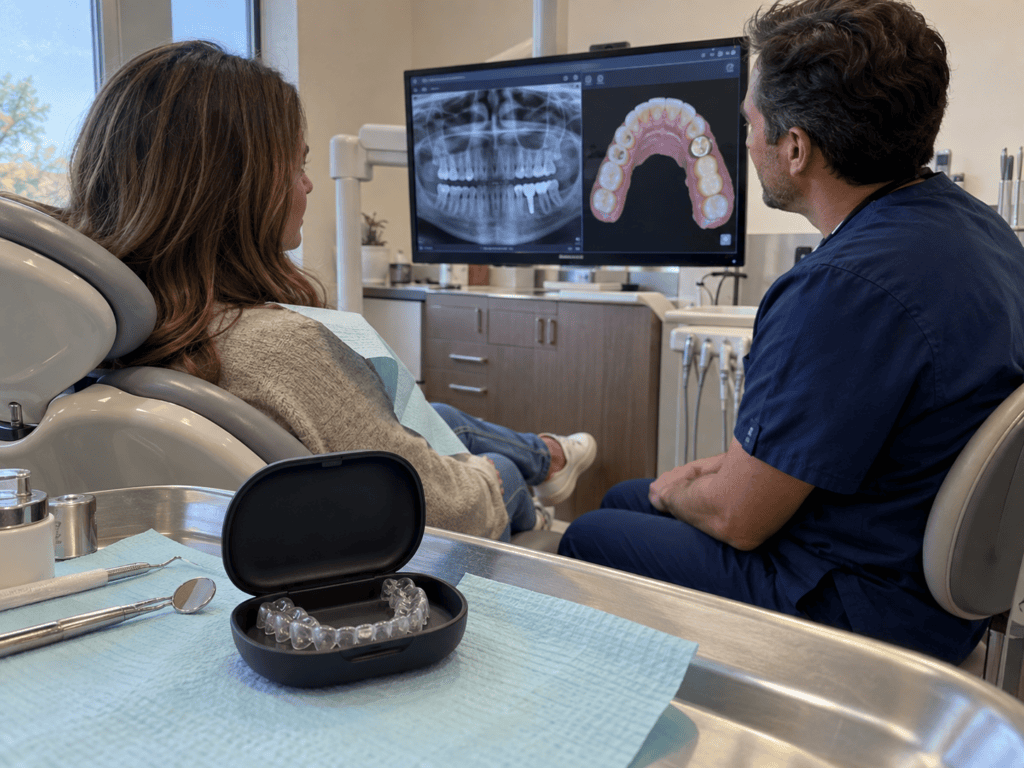
We use 3D CBCT imaging when detailed information about the treatment area is needed.
A three-dimensional view can help us assess bone dimensions and the relationship of the proposed implant site to nearby structures, including nerves and sinuses.
Imaging supports the clinical examination and treatment discussion. It does not independently guarantee candidacy or determine whether a temporary tooth can be attached.
The treatment plan also needs to account for the future restoration. The implant must be positioned to support an appropriate replacement tooth, rather than simply placed wherever bone is available.
Can You Have Bone Grafting and an Implant Together?
Sometimes. Needing bone grafting does not automatically rule out immediate placement.
In selected situations, an implant can obtain adequate support from existing bone while graft material addresses a surrounding deficiency. The graft and implant may then be placed during the same visit.
Other patients need grafting first, followed by healing before implant placement. More extensive bone loss or a need for ridge augmentation may change the sequence.
The important distinction is whether the existing site can support the planned implant now or whether additional preparation is needed first. A staged approach may still lead to implant treatment even when same-day placement is unsuitable.
Will You Leave With a Tooth That Day?
A temporary tooth may be possible, but it is a separate decision from implant placement.
If the implant is stable and the bite can be managed appropriately, a temporary restoration may be attached. It is designed to protect the healing implant and may have restrictions on how it is used.
Do not assume a temporary tooth is ready for normal chewing. Follow the instructions for your restoration and ask which foods or activities to avoid.
If an implant-supported temporary tooth is unsuitable, ask whether another temporary replacement is appropriate. The answer depends on the location, tissues, and treatment plan.
The final restoration comes after the necessary healing and clinical checks. Your dentist should explain that sequence without promising a fixed completion date.
Why Might the Treatment Plan Change?
Planning begins before extraction, but some findings become clearer when the tooth is removed.
The socket may have more damage than expected, or the implant may not obtain enough initial stability. Your dentist may recommend postponing placement, adding preparatory treatment, or delaying attachment of a temporary tooth.
Discuss these possibilities before the appointment. Ask what the alternative plan would involve and how it would affect your temporary replacement and future visits.
Changing the sequence can be part of responding appropriately to clinical findings. The original plan should allow for that possibility.
What Happens During the Evaluation?
At Valdosta Family Dentistry, we begin by understanding your dental concerns and replacement goals. We review the relevant health history, examine the teeth and gums, and assess the treatment site and bite.
Imaging helps clarify anatomy when needed. We then discuss whether immediate placement, preparatory treatment, or a staged approach fits the findings.
Your treatment discussion should cover:
- What can be completed at the extraction appointment.
- Whether a temporary tooth is planned.
- Why grafting or additional healing may be needed.
- The benefits, limitations, and possible complications.
- The expected sequence of follow-up and restorative visits.
Bring your questions, especially if you have heard “teeth in a day” used elsewhere. Ask exactly what that phrase means for your proposed treatment.
What About Comfort and Recovery?
Implant treatment requires appropriate local anesthesia. If dental anxiety is a concern, we can discuss our sedation options, including nitrous oxide, oral conscious sedation, and anxiolysis.
The choice depends on your health and planned procedure. Sedation is not necessary or appropriate for every patient, and it does not replace local numbing.
Same-day placement still involves healing. Follow the instructions about cleaning, eating, activity, medication, and follow-up appointments. If sedation is planned, confirm transportation and aftercare arrangements in advance.
Ask whom to contact if you have concerns during recovery. Report an implant that feels loose or painful to your dental team promptly.
Frequently Asked Questions
Can everyone receive an implant immediately after extraction?
No. The extraction site, supporting bone, gum health, medical history, and implant stability all influence the decision. An examination and treatment planning are needed before recommending immediate placement.
Does needing a bone graft mean I cannot get a same-day implant?
Not necessarily. Some patients can have grafting and placement together, while others need grafting and healing first. The extent of the deficiency and available implant support help determine the sequence.
Does same-day placement mean I receive my permanent tooth immediately?
No. Placement, attachment of a temporary tooth, and completion of the permanent restoration are separate steps. A same-day temporary tooth is possible only when the clinical conditions allow.
What if I am not a candidate for same-day treatment?
You may still be a candidate for an implant through a staged approach. We can explain the recommended preparation and timing, along with other replacement options when appropriate.
Discuss Your Implant Options in Valdosta, GA
Same-day dental implants may be appropriate when the treatment site and your health support immediate placement. An individualized plan should explain both what can happen that day and what remains ahead.
We want you to understand the reasons behind our recommendations and feel comfortable asking questions.
Contact Valdosta Family Dentistry to schedule an evaluation and discuss an implant treatment plan based on your needs.